
If your dream feline is a docile, sedentary lap-hugger that spends its day sleeping in sunny corners, the Bengal is definitely not the match for you. Universally recognized as the absolute powerhouse of the domestic cat world, this stunning breed brings the breathtaking, untamed aesthetic of a wild jungle cat directly into the modern home.
With their highly distinct rosetted or marbled coats, sleek athletic contours, and intense, bright intelligence, Bengals carry themselves with unmatched confidence. They are confident, highly interactive, and structurally powerful athletes that live life in the fast lane, requiring active mental stimulation and plenty of vertical space. Let’s explore the history, specialized wild genetics, and dynamic behavioural profiles of the extraordinary Bengal cat.
🐾Physiological and Behavioral Profile
| Breed Attribute | Standard Metric / Trait |
|---|---|
| Average Weight | Males: 4.5kg – 6.8kg (10–15 lbs) Females: 3.6kg – 5.4kg (8–12 lbs) |
| Average Lifespan | 12 to 16 years |
| Coat Texture & Type | Short, exceptionally dense, pelt-like, and remarkably soft; often features “glitter” |
| Energy & Activity Level | Extremely High (Perpetually active, highly athletic, passionate about water) |
| Vocalization Level | High (Exceedingly communicative; utilizes a wide range of unique chirps, trills, and gravelly meows) |
A Wild Hybridization: The Origin of a Domestic Leopard
The history of the Bengal cat is a fascinating journey of intentional genetic hybridization. The breed’s true foundation began in the United States during the early 1960s and 1970s, when a brilliant geneticist named Jean Mill first crossed a domestic shorthair cat with a wild Asian Leopard Cat (Prionailurus bengalensis)—a small, forest-dwelling wild feline native to Southeast Asia.
The goal of this early crossbreeding program was not simply to create an exotic pet, but to inject the wild cat’s natural resistance to specific feline diseases into the domestic gene pool, while preserving its spectacular spotted coat. Early generations of these hybrids were known as F1, F2, and F3 cats. To ensure they made safe, dependable indoor companions, these early lines were bred back to domestic cats (such as the Egyptian Mau and Abyssinian).
By the time a Bengal reaches the F4 generation (four generations removed from the wild ancestor), it is considered a fully domesticated pedigree cat. The International Cat Association (TICA) officially granted the breed full championship status in 1991, and it has since grown into one of the most popular registered breeds on Earth.
📐 Distinct Physical Architecture & The Science of the Pelt
Physically, the Bengal exhibits a long, substantial, and highly muscular somatotype. They carry a heavy skeletal framework with hind legs that are noticeably longer than their front legs, giving them an incredibly powerful spring and a low, stalking stride reminiscent of a wild panther. Their heads form a broad, modified wedge with wide whisker pads, prominent cheekbones, and large, round nocturnal eyes set into dark markings.
The absolute hallmark of the breed is its unique pelt-like coat, which feels vastly different from standard domestic cat fur:
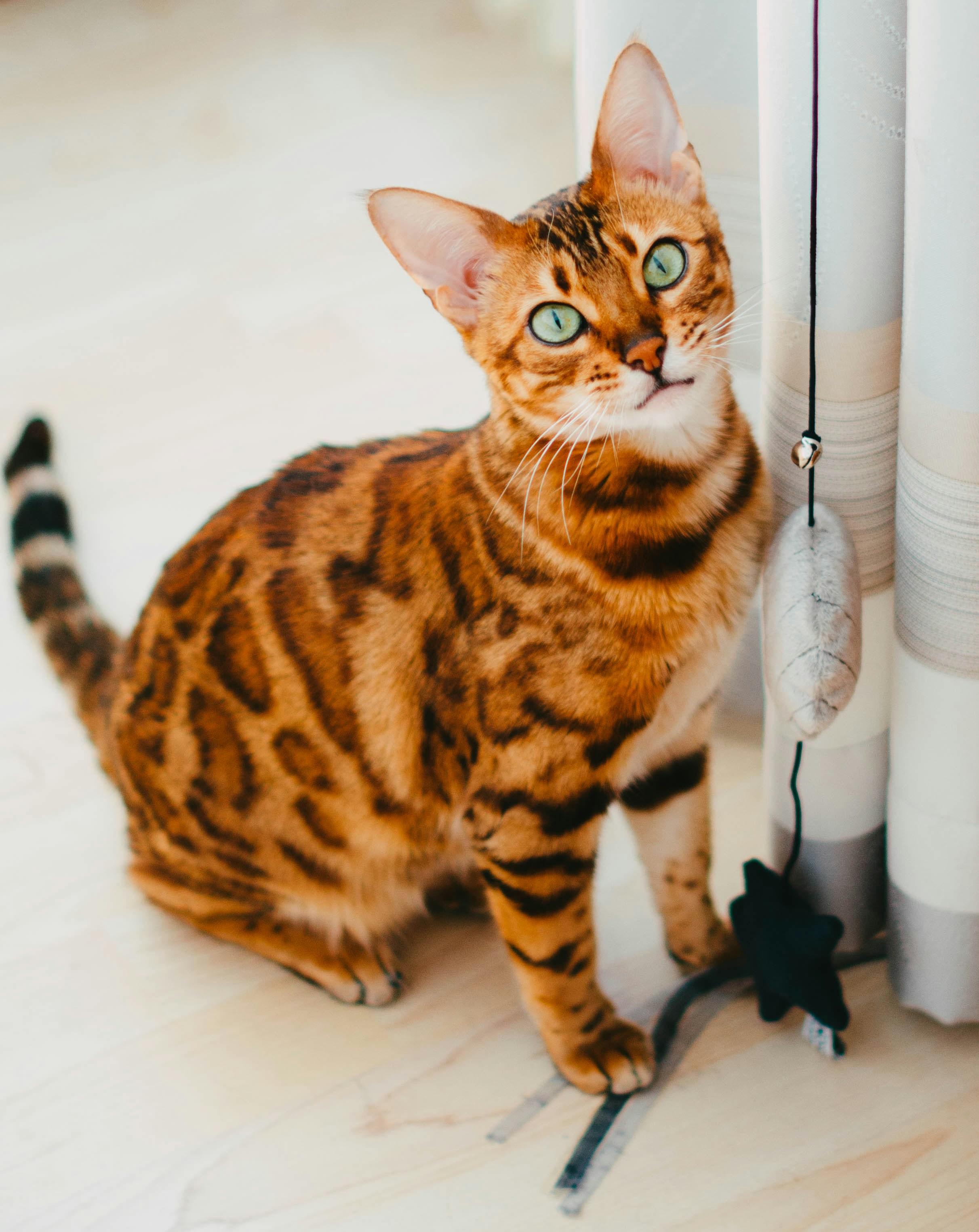
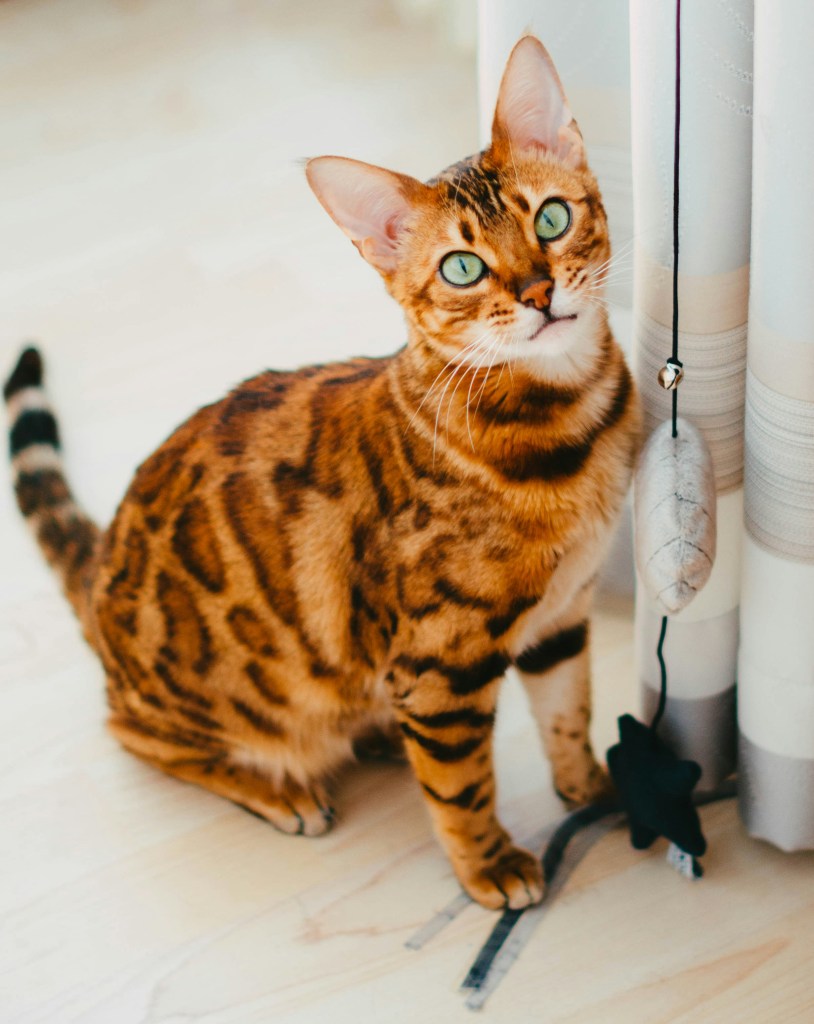
- The Rosetted Phenotype: Bengals are the only domesticated cats that display the distinct “rosette” markings found on wild leopards and jaguars. These markings consist of a dark, distinct outer ring circling a warm, contrasting center color. They can also display a “marbled” pattern, featuring fluid, horizontal swirls that mimic exotic stone.
- The “Glitter” Gene: Many Bengals possess a highly unique, recessive genetic trait known simply as “glitter.” This structure translucentizes the hair shafts, allowing them to trap light and make the cat look as though it has been dusted with a fine layer of metallic gold or silver shimmer.
- Color Variations: While the traditional and most famous coloration is the warm Brown Tabby (ranging from golden-bronze to deep mahogany), modern registries also recognize striking Snow Bengals (including Lynx Point, Mink, and Sepia), as well as sleek Silver and deep Smoke variations.
🧠 Behavior, Temperament, and Environmental Enrichment
The psychological and behavioural profile of the Bengal centers around an extraordinarily high drive for cognitive stimulation, structural play, and aquatic exploration. They are highly confident felines that treat their home environment as a dynamic territory to be mastered.
1. Advanced Proprioception and Jumping Capability
Powered by an incredibly muscular hindquarters, a healthy adult Bengal can effortlessly leap onto surfaces up to three times its own height from a complete standstill. They live their lives in three dimensions and will automatically claim the highest points in your home—whether that means the top of your kitchen cabinetry or the upper trim of your doors. Providing heavy-duty vertical cat trees and active exercise wheels is a fundamental environmental requirement to prevent frustration.
2. The Aquatic Fascination
Inherited directly from their wild Asian Leopard Cat ancestors, Bengals possess a notorious, deeply ingrained passion for water. Unlike traditional felines that avoid moisture, a Bengal will actively investigate running faucets, splash heavily in their water bowls, and frequently attempt to join their owners inside the shower or bathtub.
3. High Social and Communicative Intelligence
Bengals are incredibly intelligent, vocal, and highly emotionally integrated with their human families. They learn routines instantly and are famous for figuring out how to flip light switches, open cabinet doors, and turn on water taps. They speak to their owners using a highly distinct, gravelly vocal range, utilizing an array of unique trills, chirps, and demands to express their needs.
🧼 Grooming, Diet, and Health Considerations
Because their unique pelt-like coat is short, tight, and highly efficient at self-cleaning, Bengals require very little manual grooming. A quick, weekly pass with a soft rubber grooming mitt is more than sufficient to sweep away dead hairs and keep their shimmering glitter looking its absolute best. However, their specific internal biology requires focused attention in a few critical health corridors:
- Hypertrophic Cardiomyopathy (HCM): Like many active pedigreed lines, Bengals can carry a genetic predisposition to HCM, an inherited thickening of the heart muscle walls. Ethical breeders perform annual echocardiograms on all active breeding pairs to filter this out of their bloodlines.
- Progressive Retinal Atrophy (PRA-b): A specific genetic mutation that causes the slow, progressive degeneration of the retina, leading to blindness. Fortunately, a simple, non-invasive DNA test can identify carriers, allowing breeders to ensure kittens are completely free of the condition.
- High-Protein Dietary Requirements: Because Bengals are exceptionally active and maintain a high percentage of lean muscle mass, they require a diet rich in high-quality animal proteins and moisture. Many owners choose to fuel their Bengals using premium commercial wet foods or carefully balanced, vet-approved raw diets to support their high metabolic needs.
Final Thoughts: Is the Bengal Right for You?
Welcoming a Bengal into your home is very much like sharing your life with a tiny, beautifully rosetted jungle cat. If you are away from home for long stretches or prefer a quiet, predictable lifestyle, their intense energy and high intelligence will quickly become overwhelming. But if you have the time to invest in interactive puzzle training, leash walks, and robust environmental play, the Bengal will reward you with unparalleled loyalty, endless entertainment, and a deeply loving bond. To read more about breed standards and official preservation lines, exploring the international registration logs on The International Cat Association (TICA) offers fantastic guidance.