If your dream feline is a cat that perfectly bridges the gap between the ultra-calm, luxurious coat of the Persian and the striking color-pointed elegance of the Siamese, the Birman is the ultimate answer. Affectionately known as the “Sacred Cat of Burma,” this stunning breed carries an aura of mystical history and gentle dignity that is completely unmatched in the domestic cat world.
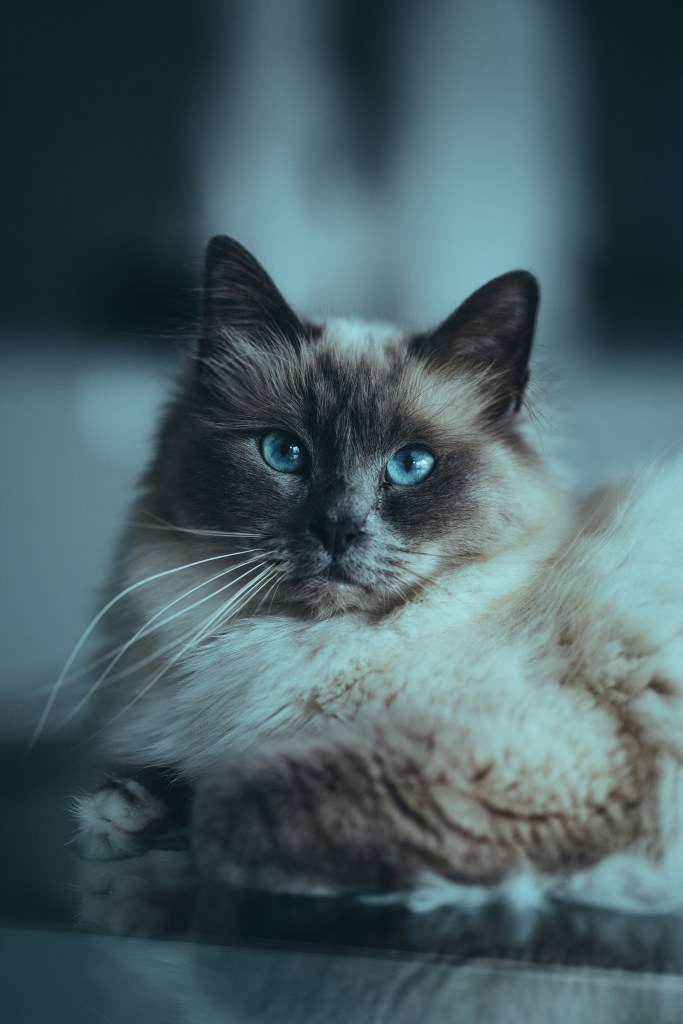
With their piercing sapphire-blue eyes, heavy bone structure, silky semi-long coats, and their trademark pure-white “gloves” on all four paws, Birmans are visually unforgettable. They are the ultimate low-stress, indoor-optimized companions, famous for their deeply peaceful, human-centric temperaments. Let’s dive deep into the fascinating legends, distinct physical architecture, and loving behavioural patterns of the exquisite Birman cat.
🐾Physiological and Behavioral Profile
| Breed Attribute | Standard Metric / Trait |
|---|---|
| Average Weight | Males: 4.5kg – 6.8kg (10–15 lbs) Females: 3.2kg – 4.5kg (7–10 lbs) |
| Average Lifespan | 12 to 16 years |
| Coat Texture & Type | Semi-longhaired, single-layered silk; heavy neck ruff, no undercoat |
| Energy & Activity Level | Low to Moderate (Gentle, quietly playful, absolute lounge lovers) |
| Vocalization Level | Low (Speaks in exceptionally soft, musical chirps when communicating) |
From Buddhist Temples to European Royalty: The Mystical Origin
The history of the Birman cat is steeped in romantic folklore. According to ancient Southeast Asian legend, these cats were originally pure white, short-haired guardians of the Khmer temple of Lao-Tsun, built to honor a golden, sapphire-eyed goddess.
The myth states that when the temple’s high priest was tragically killed by raiders while praying, his loyal temple cat, Sinh, stepped onto his master’s chest. Instantly, the priest’s soul merged with the feline, transforming the cat’s fur into a warm golden hue and its eyes into the goddess’s deep sapphire blue, while the paws remained pure white as a symbol of untainted purity.
In the physical world, the breed’s documented history began in 1919, when a pair of these sacred cats was covertly shipped from Burma to France. While the male cat did not survive the grueling ocean voyage, the female, named Sitah, was pregnant. Her kittens established the true European foundation for the breed.
The French registry officially recognized the Sacré de Birmanie in 1925. The breed was later nearly wiped out entirely during World War II, with only a single breeding pair left in Europe. Dedicated breeders outcrossed them with Persians and Siamese to save the line, ultimately achieving official championship status with the Cat Fanciers’ Association (CFA) by 1967. Today, it remains a tightly preserved, universally beloved lineage CFA Birman Breed Profile.
📐 Distinct Physical Architecture & The Mystery of the Gloves
Physically, the Birman exhibits a robust, substantial, and long somatotype. Unlike the sleek, tubular frame of the Siamese, Birmans are heavy-boned, stocky felines with wide chests, rounded heads, full cheeks, and a slightly Roman-curved nose profile. Their eyes are slightly oval and must always display a deep, piercing shade of sapphire blue to meet show standards.
The defining hallmark of the breed is its highly unique, specialized coat structure and color patterns:
- The Single-Layer Silk Coat: Despite being a long-haired cat, the Birman completely lacks a downy undercoat. Because their fur consists of a single layer of fine, heavy-lying guard hairs, it feels remarkably like silk, flows beautifully with their movements, and is naturally resistant to matting or knotting.
- The Pure White Gloving (Gants): The most complex genetic aspect of breeding a Birman is achieving perfect white “gloves” on their paws. This trait is driven by a specific, recessive spotting gene mutation. The white coloring must cover all toes on the front paws cleanly (gloves) and extend up the back of the hind legs in a distinct V-shape (known as “laces” or “gauntlets”).
- Color Mutations: Birmans are a color-pointed breed, meaning their faces, ears, legs, and tails carry a darker contrast to their pale, eggshell-colored bodies. Recognized shades include Seal Point, Blue Point, Chocolate Point, and Lilac Point, alongside modern variations like cream, red, and beautiful tortoiseshell patterns.
🧠 Behavior, Temperament, and Family Ecology
The psychological and behavioural profile of the Birman cat centers around an exceptionally high capacity for tranquil social bonding and calm environmental adaptation. They are the quintessential “easygoing” cats of the domestic world.
1. Passive, Gentle Companionship
Birmans are fundamentally peace-loving introverts that display an immense devotion to their human families. They practice a form of quiet, unobtrusive companionship; they will not climb up your kitchen cabinets, claw at your curtains, or yell for food. Instead, they prefer to follow you calmly from room to room, settling softly on the floor, the sofa, or your lap to quietly supervise your day.
2. High Tolerance and Multi-Species Socialization
Because of their deeply stable, unflappable nervous systems, Birmans rarely exhibit fear-based aggression or anxiety. They are incredibly patient and tolerant, making them an excellent choice for households with active young children or friendly household dogs. They easily adapt to change and are highly comfortable in single-apartment settings or busy family environments alike.
3. Low-Frequency Vocalization
True to their gentle temple heritage, Birmans are exceptionally quiet. When they do choose to speak, they do not utilize harsh or demanding meows. Instead, they communicate using a highly unique, ultra-soft, bell-like musical chirp or trill that is barely louder than a whisper.
🧼 Grooming, Diet, and Health Considerations
Because the Birman lacks a thick undercoat, they require remarkably little physical maintenance compared to other long-haired felines. A quick, twice-weekly brush with a soft slicker brush or a stainless-steel comb is more than enough to lift away loose guard hairs, maintain their coat’s natural mirror-like sheen, and prevent any friction tangles beneath their armpits. From a medical standpoint, they are a robust and long-lived breed, though focus must be kept on a few critical corridors:
- Feline Hypertrophic Cardiomyopathy (HCM): An inherited heart disease characterized by the thickening of the heart walls. Reputable breeders utilize regular echocardiogram screenings on their breeding stock to ensure their lines remain completely clear of this hereditary risk.
- Kidney Health Monitoring: Birmans can occasionally show an increased incidence of early-onset renal dysfunction or cyst formation. Providing a moisture-rich diet and ensuring your cat has access to active water fountains is highly beneficial to support their filtration systems.
- Caloric Control for Sedentary Lifestyles: Because Birmans lead a highly relaxed, low-energy indoor lifestyle, they are naturally prone to weight gain post-neutering. To protect their heavy joints from excess stress, avoid free-feeding dry kibble and instead prioritize a portion-controlled diet rich in high-quality animal proteins.
Final Thoughts: Is the Birman Right for You?
Welcoming a Birman into your home is very much like introducing a serene, beautifully gloved piece of living history into your life. If you prefer a highly active, chaotic, high-jumping athlete, their slow-moving, grounded nature may feel too quiet. But if you desire an incredibly affectionate, peaceful, and visually breathtaking soulmate that will quietly anchor your home with unconditional love, the Birman is absolute perfection. To explore more about tracking down ethical global breeders or reviewing international standard lines, the registry archives of The International Cat Association (TICA) offer exceptional guidance.