If you are captivated by the sleek silhouette and vocal personality of the Siamese but long for a companion with a softer, more luxurious touch, the Balinese is an absolute dream feline. Often described as the “ultra-refined aristocrat” of the cat world, this breath-taking breed is essentially a long-haired Siamese, wrapped in a single layer of fluid, ermine-like silk.
Despite their glamorous, dancer-like appearance—which inspired their name after the graceful dancers of Bali—these cats are far from fragile ornaments. They are high-octane, intensely affectionate, and deeply communicative companions that live to be the absolute center of your universe. Let’s explore the history, specialized genetics, and vibrant behavioral profile of the enchanting Balinese.
🐾Physiological and Behavioral Profile
| Breed Attribute | Standard Metric / Trait |
|---|---|
| Average Weight | Males: 3.6kg – 5.0kg (8–11 lbs) Females: 2.3kg – 3.6kg (5–8 lbs) |
| Average Lifespan | 12 to 20 years |
| Coat Texture & Type | Medium-long, single-coated (no undercoat), silkily fine and lying flat |
| Energy & Activity Level | High (Highly acrobatic, deeply playful, craves constant engagement) |
| Vocalization Level | High (Exceedingly conversational; speaks in soft, melodic tones) |
An Elegant Mutation: The History of the Long-Haired Siamese
The Balinese did not originate on the tropical island of Bali. Instead, the breed is a natural, home-grown product of American breeding programs. Throughout the early 20th century, long-haired kittens would occasionally appear entirely by accident in purebred Siamese litters. For decades, these fluffy anomalies were quietly quietly given away as pets, viewed by early breeders as deviations from the strict short-haired standard.
However, in the mid-1950s, a visionary breeder named Marion Dorsey in California decided to embrace this natural genetic twist. She began a dedicated breeding program to isolate and refine these long-haired lines. Fellow breeder Helen Smith joined the cause and famously coined the name “Balinese” because the cats’ fluid movements and elegant lines reminded her of traditional Balinese dancers.
The Cat Fanciers’ Association (CFA) officially recognized the breed for full championship status in 1970. Today, the Balinese stands as a testament to the beauty of natural genetic variation, celebrated by major registries worldwide including The International Cat Association (TICA).
📐 Distinct Physical Architecture & The Science of the Silk
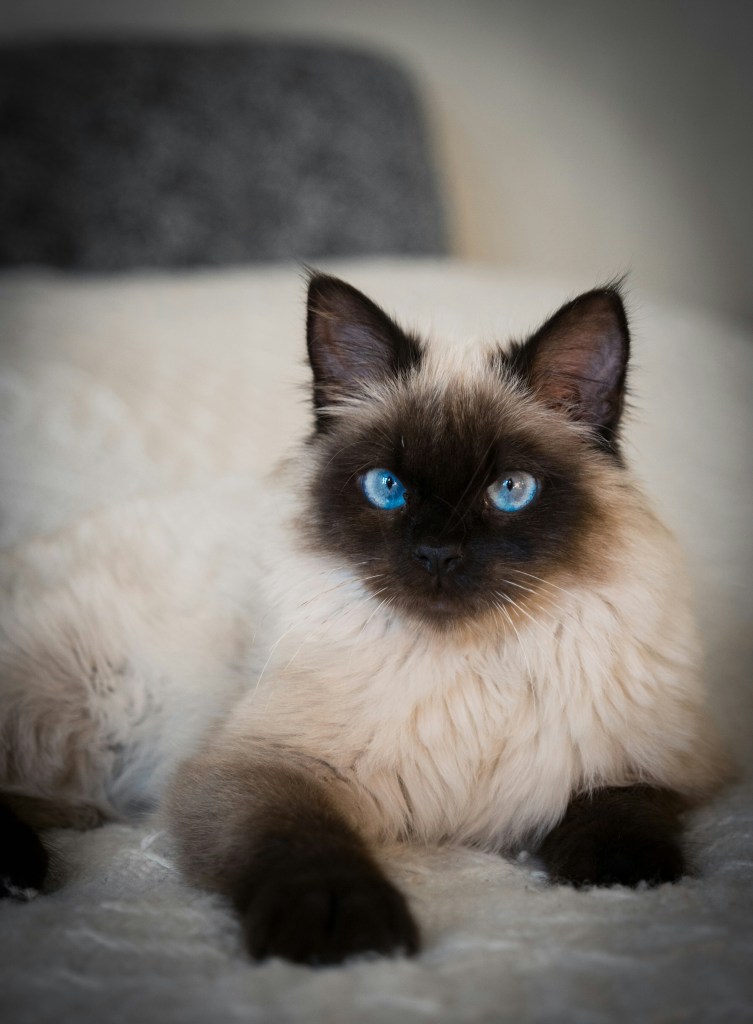
Physically, the Balinese is the epitome of the extreme foreign somatotype. They carry a lithe, tubular body shape with long, tapering lines, supported by slender legs and neat, small paws. Their heads form a flawless, un-pinched wedge shape that fans out from the nose to the tips of their large, strikingly wide-set ears. Their most mesmerizing feature is their almond-shaped eyes, which must always radiate a vivid, deep sapphire blue.
The defining hallmark of the breed is its magnificent coat, which operates under unique genetic parameters:
- The Single-Coat Phenotype: Unlike most long-haired breeds (such as the Persian), the Balinese completely lacks a downy undercoat. Because the fur consists of only a single layer of fine guard hairs, it lies flat against the body, showcasing their athletic muscle tone and preventing the coat from ever matting or knotting.
- The Temperature-Sensitive Point Pattern: Balinese kittens are born pure white. As they mature, a temperature-sensitive enzyme restricts pigment production to the coolest extremities of their body—the face mask, ears, paws, and plumed tail. Recognized colors include the classic Seal Point, Chocolate Point, Blue Point, and Lilac Point (with extended variations like Javanese lynx points accepted in specific registries).
- The Hypoallergenic Fact: While no cat is 100% hypoallergenic, scientific data indicates that the Balinese produces significantly lower levels of the Fel d 1 protein (the primary allergen in feline saliva and skin oils) than standard domestic cats, making them highly popular among mild allergy sufferers.
🧠 Behavior, Temperament, and Vocal Communication
The psychological profile of the Balinese is identical to the Siamese in terms of raw intelligence and social demand, but they are widely noted for having a slightly softer, more sensitive disposition.
1. High Conversational Intelligence
The Balinese is an intensely verbal feline. They do not merely meow; they hold structured conversations with their human owners. They will greet you at the door with a series of expressive trills, chirps, and vocal sweeps to comment on their environment. However, their voice is typically softer, sweeter, and less raspy than that of their Shorthair ancestors.
2. Athletic Proprioception & Play
Powered by lean muscle and an incredibly light skeletal frame, the Balinese possesses elite jumping capabilities. They love navigating the vertical layout of a home, leaping gracefully from the floor to the absolute highest point of your bookshelves or doors. They are highly cognitive and easily master interactive puzzle toys, clicker tricks, and can easily be trained to play fetch with crinkle balls.
3. Intense Shadow Companionship
This breed suffers greatly if isolated or ignored. They practice extreme “velcro companionship”—they will shadow you into the bathroom, sit on your shoulders while you work, and burrow beneath your bed sheets at night. They treat their human family as their personal clan and thrive best in multi-pet households where they have a constant companion to interact with.
🧼 Grooming, Diet, and Health Considerations
Because the Balinese lacks a dense undercoat, their grooming needs are surprisingly low for a long-haired feline. A quick twice-weekly brush with a soft slicker brush or a stainless-steel comb is all it takes to keep their silky coat flowing and remove loose hairs. Thanks to their natural pedigree origins, they are exceptionally long-lived, frequently crossing into their late teens or early twenties, though their genetic makeup requires attention in a few areas:
- Progressive Retinal Atrophy (PRA): A hereditary ocular condition that results in the slow degeneration of the retina. Reputable breeders utilize advanced DNA screening to ensure their breeding stock is completely clear of the PRA gene.
- Feline Strabismus & Nystagmus: Due to the genetics tied to the color-point pattern, some Balinese can exhibit crossed eyes (strabismus) or involuntary tracking movements (nystagmus). This is an optic-nerve routing trait that does not impair their indoor quality of life or visual happiness.
- Lean Muscle Maintenance: Because of their fine, long bones, carrying excess body fat poses a severe hazard to their joints. A portion-controlled diet rich in high-quality animal proteins, combined with ample daily interactive play, is critical to maintaining their signature athletic silhouette.
Final Thoughts: Is the Balinese Right for You?
Welcoming a Balinese into your household is akin to adding a highly interactive, beautifully plumed shadow to your life. If you desire a quiet, independent cat that blends into the background, this breed will overwhelm you. But if you want an incredibly intelligent, deeply loyal, conversational life partner that matches your energy step-for-step, the Balinese is feline perfection. To verify official show criteria or track down certified, ethical regional breeders, the historical registries of the Governing Council of the Cat Fancy (GCCF) provide comprehensive, trusted archives.