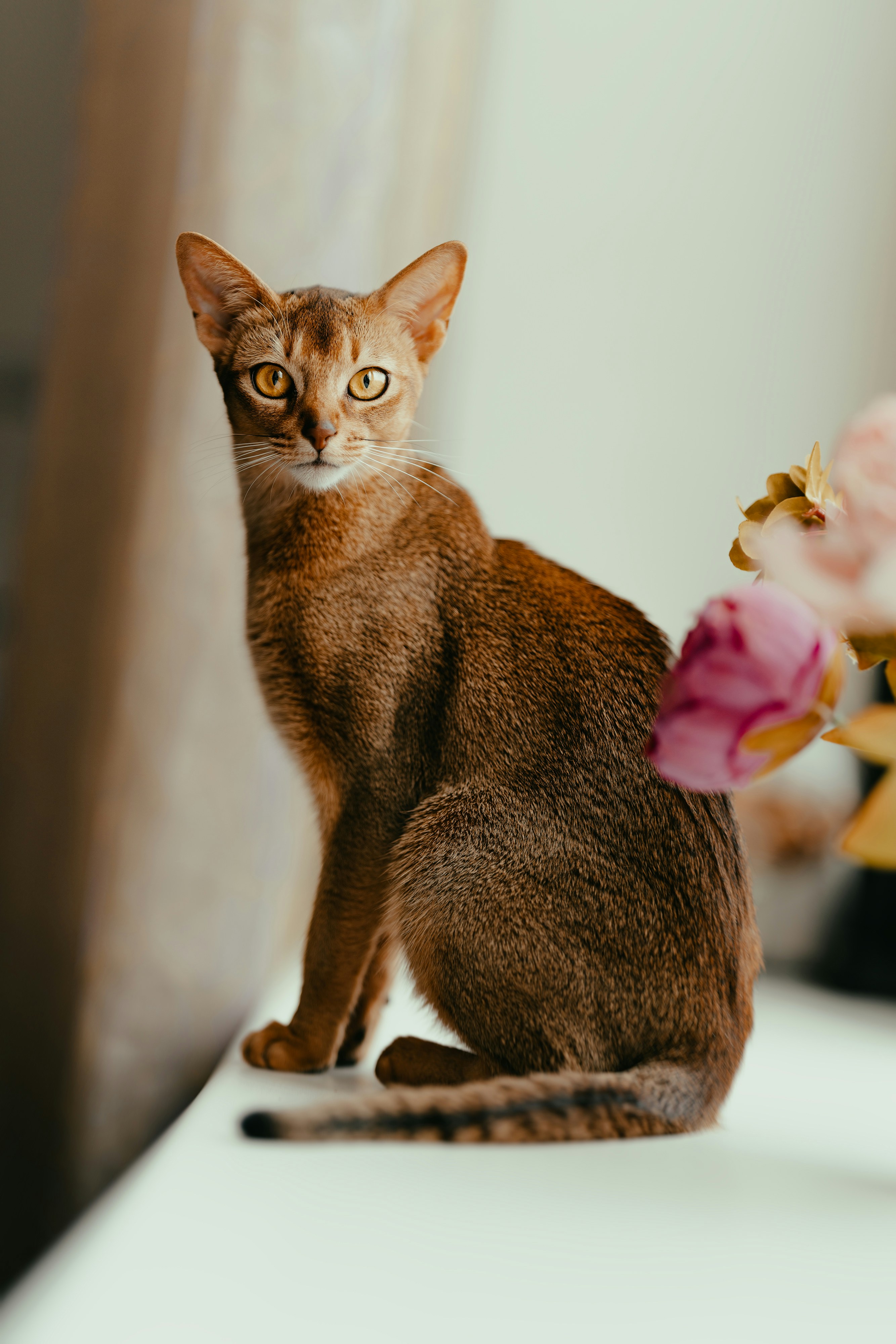


If you are looking for a calm lap cat that spends its day lounging on your sofa, the Abyssinian is definitively not the breed for you. Affectionately known to enthusiasts simply as the “Aby”, this striking, high-energy feline is widely celebrated as the absolute gymnast of the domestic cat world.
With their beautifully ticked, wildcat-like coats, large alert ears, and intense, bright intelligence, Abyssinians carry themselves with the grace of ancient Egyptian statues. They live their lives in three dimensions, constantly exploring high perches and treating their domestic environment as a personal athletic obstacle course. Let’s explore the rich history, complex genetics, and dynamic behavioural patterns of this fascinating breed.
🐾Physiological and Behavioral Profile
| Breed Attribute | Standard Metric / Trait |
|---|---|
| Average Weight | Males: 4.5kg – 5.5kg (10–12 lbs) Females: 2.7kg – 4.1kg (6–9 lbs) |
| Average Lifespan | 12 to 15 years |
| Coat Texture & Type | Short, silkily fine, and dense; distinctively “ticked” agouti patterning |
| Energy & Activity Level | Extremely High (Highly athletic, perpetually curious, loves vertical spaces) |
| Vocalization Level | Low to Moderate (Very quiet, soft bell-like chirps rather than demanding meows) |
From the Banks of the Nile to Modern Pedigree: The Breed’s Origin
The history of the Abyssinian is shrouded in mystery and genetic intrigue. For decades, popular legend held that the breed descended directly from the sacred cats of ancient Egyptian pharaohs, owing to their striking resemblance to felines depicted in historical hieroglyphs and tomb paintings. The very name “Abyssinian” was given because the first documented cat shown in England—a female named Zula—was reportedly brought back from Abyssinia (modern-day Ethiopia) at the end of the Anglo-Abyssinian War in 1868.
However, modern phylogenic DNA mapping has completely rewritten this historical narrative. Genetic studies trace the true biological lineage of the Abyssinian back to the coastal regions of the Indian Ocean, spanning between parts of Southeast Asia and India.
Early British merchants likely acquired these distinctly ticked cats from ports along the Indian Ocean trade routes and introduced them to Europe. Over the next several decades, British breeders refined the type by crossing them with local British Shorthairs until the breed was granted official championship status. Today, it stands as one of the oldest, most tightly preserved pedigreed lineages recognized by The Cat Fanciers’ Association (CFA).
📐 Distinct Physical Architecture & Ticking Genetics
The structural layout of an Abyssinian is Built for optimal athletic performance. They feature a lithe, foreign somatotype—a lean, muscular, and elegant frame that balances an athletic build with delicate refinement. They possess long, slender legs ending in compact, oval paws, which give them the appearance of standing perpetually on their tip-toes. Their heads form a soft, modified wedge shape with large, almond-shaped eyes ringed by dark eyeliner markings.
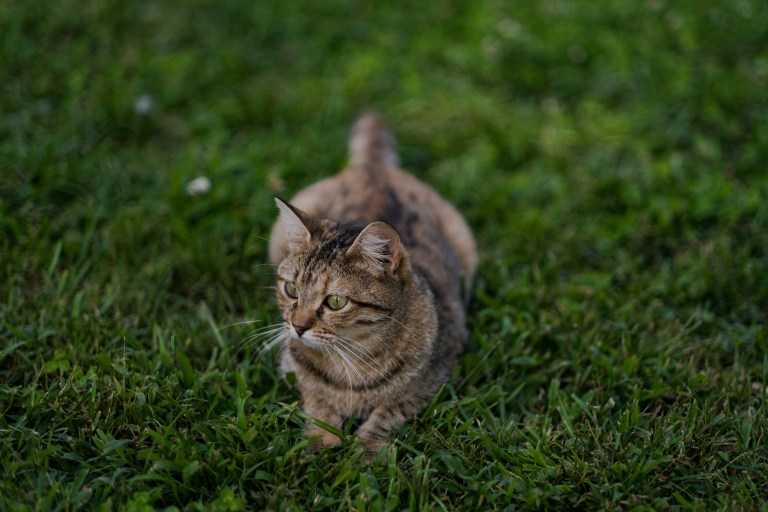
The definitive feature of the breed is the agouti (ticked) coat pattern. Instead of solid coloration or traditional tabby stripes running down their torso, every individual hair on an Abyssinian features multiple bands of dark and light pigmentation:
- The Ticked Phenotype: The base of each hair shaft begins with a warm, lighter hue, followed by alternating dark bands that terminate in a dark tip. This creates a shimmering, translucent effect across their fur that closely resembles the wild camouflage of a desert hare.
- Recognized Color Variants: While the primary and most famous coat color is Ruddy (a deep, burnished sienna brown ticked with dark sepia or black), registries also recognize Sorrel (a bright warm copper ticked with chocolate), Blue (a soft slate blue ticked with deep cream), and Fawn (a warm rose-beige ticked with cocoa brown).
🧠 Behavior, Temperament, and Environmental Needs
The psychological and behavioral profile of the Abyssinian centers around intense environmental exploration and cognitive engagement. These cats possess an insatiable curiosity, processing their surroundings through active experimentation and problem-solving.
1. Vertical Domain Management & Proprioception
Abyssinians are natural-born climbers possessing extraordinary proprioception and leg-spring capability. Powered by long, muscular hind limbs, an average adult Aby can effortlessly leap six feet vertically from a standstill. In a household setting, they will systematically seek out the highest point in any room—whether that means navigating to the top of your kitchen cabinets, open doors, or refrigerators. Providing substantial environmental enrichment, such as heavy-duty vertical cat trees and wall-mounted steps, is a strict biological necessity for this breed.
2. The Interactive Shadow
While they are profoundly affectionate, they are rarely content sitting passively on a lap. Instead, an Abyssinian shows attachment by involving themselves in your daily workflow. They are notorious “helpers” that will closely observe your hands as you write, type, or cook, often attempting to gently swipe at objects to figure out how they function. They require significant mental stimulation, making them highly receptive to advanced clicker training, leash training, and fetching toy mice.
3. High Social Requirements
Because of their complex social needs, Abyssinians are highly prone to separation anxiety if left completely alone for long stretches. They thrive best in active households or when paired with another high-energy feline companion (such as another Abyssinian, Somali, or Siamese) to keep their analytical minds occupied while their humans are at work.
🧼 Grooming, Diet, and Health Considerations
Thanks to their natural development history, Abyssinians are a structurally sound, highly resilient breed. Their short, close-lying coat requires minimal physical maintenance. A gentle weekly grooming session with a rubber brush or a polishing cloth is more than sufficient to remove dead hairs and keep their shimmering ticking pristine. However, their unique internal biology demands strict proactive care in a few specific health areas:
- Periodontal Disease Susceptibility: Abyssinians have a higher-than-average genetic risk for developing early-onset gingivitis and periodontal disease. Establishing a daily routine of dental brushing with feline-safe enzymatic toothpaste is paramount to avoiding severe tooth loss later in life.
- Pyruvate Kinase Deficiency (PK Def): This is a hereditary hemolytic anemia caused by the lack of an essential enzyme required for red blood cell metabolism. Fortunately, a simple DNA swab test can accurately identify carriers. Ethical breeders screen all parent pairs before breeding to guarantee their lines are completely free of the condition.
- Progressive Retinal Atrophy (PRA): A genetic ocular disease that causes progressive degeneration of the photoreceptor cells in the retina, eventually leading to blindness. Much like PK Def, reputable cat registries and breeders use strict DNA screening methods to eliminate this gene from modern breeding stocks.
Final Thoughts: Is the Abyssinian Right for You?
Welcoming an Abyssinian into your home is very much like adding a tiny, beautifully camouflaged wildcat to your family circle. If you can provide the vertical spaces they crave, the mental games they need, and the deep social interaction they deserve, you will be rewarded with a fiercely loyal, infinitely entertaining life partner. For further, deep-dive verification regarding breed standards, lineage registration, and structural health guidelines, check out the comprehensive breed logs maintained by The International Cat Association (TICA).