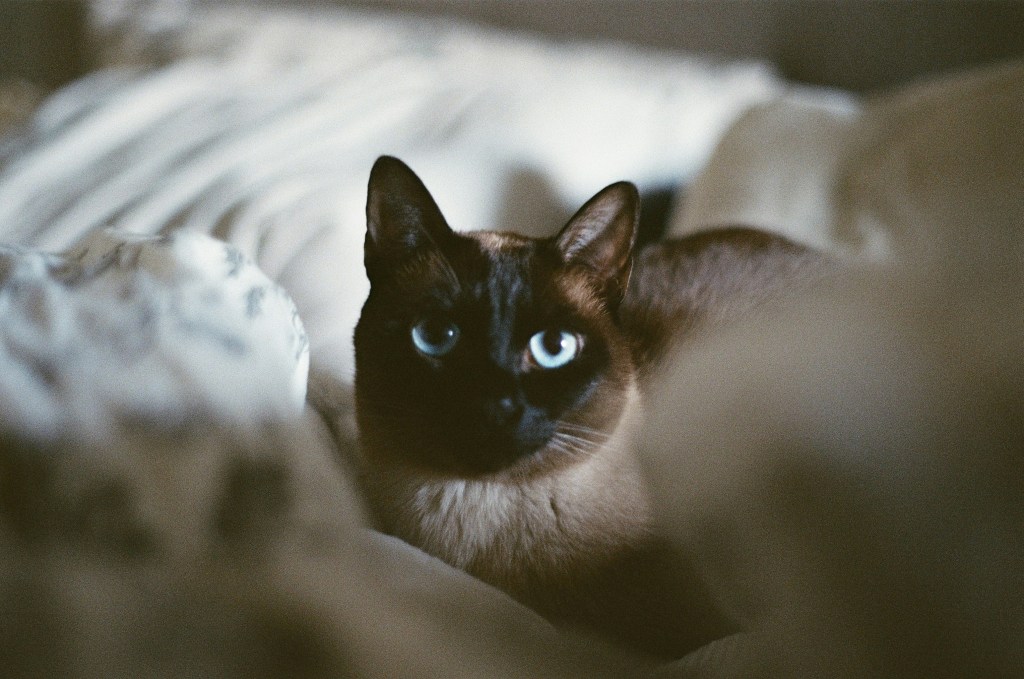
If your ideal feline companion is an independent, aloof lap ornament that sits silently in the background, the Tonkinese is definitively not the match for you. Universally celebrated for its extraordinary mink-textured coat, its perfectly balanced physical framework, and a piercing pair of luminous aqua eyes, this breathtaking breed is famous for possessing a highly conversational, gregarious personality that makes them behave like a permanent puppy.
Often described as the ultimate compromise cat wrapped in rich, solid satin, the Tonkinese lives life with boundless enthusiasm. They are intensely human-oriented, exceptionally brilliant, and highly interactive companions that treat their homes as vibrant stages to master. Let’s explore the cross-continental history, temperature-sensitive mink genetics, and dynamic behavioural profile of the extraordinary Tonkinese cat.
🐾Physiological and Behavioral Profile
| Breed Attribute | Standard Metric / Trait |
|---|---|
| Average Weight | Males: 3.6kg – 5.4kg (8–12 lbs) Females: 2.7kg – 3.6kg (6–8 lbs) |
| Average Lifespan | 12 to 16+ years |
| Coat Texture & Type | Short, exceptionally close-lying, fine, and remarkably soft; unique mink texture |
| Energy & Activity Level | Extremely High (Highly athletic, perpetually playful, elite vertical jumper) |
| Vocalization Level | High (Exceedingly communicative; utilizes soft, melodic, or purring vocal tones) |
From Wong Mau to Modern Pedigree: The Global History
The historical blueprint of the Tonkinese is deeply intertwined with the very birth of modern hybrid registration. While breeders officially standardized the lineage in the United States and Canada during the 1960s, the genetic foundation of the breed traces back to the exact same legendary matriarch as the Burmese: a walnut-brown female cat named Wong Mau, who was brought from Burma to San Francisco in 1930.
Genetic mapping later proved that Wong Mau was actually the world’s first documented “Tonkinese”—a natural cross between a Siamese and a Burmese.
In the mid-1960s, a Canadian breeder named Margaret Conroy and an American breeder named Jane Barletta independently chose to cross purebred seal point Siamese cats with sable Burmese cats. Their explicit goal was to create a cat that beautifully blended the best of both worlds: a feline that possessed the foreign elegance and intelligence of the Siamese, but tempered by the heavy bone structure, robust muscle density, and deep affection of the Burmese.
The resulting kittens were so visually striking and socially charismatic that the breed quickly achieved widespread acclaim. The Cat Fanciers’ Association (CFA) officially granted the Tonkinese full championship status in 1984, cementing its position as an international masterpiece.
📐 Distinct Physical Architecture & The Co-Dominant Mink Gene
Physically, the Tonkinese exhibits a beautifully balanced, medium-sized semi-foreign somatotype. Unlike the extreme, tubular lines of the modern Siamese or the stocky, rounded cobby frame of the British Shorthair, the Tonkinese represents the exact middle ground. When you pick up a Tonkinese, they feel remarkably solid and heavy—like a tightly packed bundle of pure, supple muscle. Their heads form a soft, modified wedge shape characterized by gently rounded contours, a blunt muzzle, and large upright ears.
The absolute hallmarks of the breed are its unique co-dominant coat genetics and aqua eyes:
- The Incomplete Dominance Matrix: The signature “Mink” look of the Tonkinese is governed by an exquisite interplay of co-dominant alleles. When a cat inherits one copy of the Siamese gene (\(c^{s}\)) and one copy of the Burmese gene (\(c^{b}\)), it expresses the Mink phenotype (\(c^s/c^b\)). This limits the stark points of the Siamese, creating a softly blended, high-contrast shading where the mask, ears, paws, and tail merge beautifully into the lighter body color.
- The Mystical Aqua Eyes: Because of this unique genetic combination, mink-patterned Tonkinese cats possess a highly specialized eye pigmentation. Their eyes must always display a vibrant, luminescent shade of aqua (greenish-blue), a rare trait in the feline kingdom.
- The Three Structural Patterns: Breeding Tonkinese lines naturally produces three distinct coat expressions, all highly valued:
- Mink (\(c^s/c^b\)): The classic standard with softly shaded point transitions and aqua eyes.
- Pointed (\(c^s/c^s\)): High-contrast points with piercing sapphire-blue eyes, matching the Siamese allele.
- Solid (\(c^b/c^b\)): Deep, uniform coloration with rich gold or green eyes, matching the Burmese allele.
- The Texture of Fine Mink: The fur is exceptionally short, fine, and close-lying. It completely lacks a fluffy undercoat, allowing the sleek hair to feel remarkably soft, dense, and luxurious—resembling natural mink pelt.
🧠 Behavior, Temperament, and Social Packs
The psychological and behavioural profile of the Tonkinese centers around an extraordinarily high capacity for canine-like bonding, acrobatic problem-solving, and conversational diplomacy.
1. The Gregarious Welcome Committee
If you prefer an independent, aloof pet that hides under furniture or cowers when guests arrive, a Tonkinese will quickly rewrite your expectations. This breed completely rejects social shyness. When your front door opens, a Tonkinese will typically stride forward confidently to greet the visitors, inspect their bags, and climb straight into their laps to claim the center of attention. They view every human as a potential playmate or cuddle source.
2. Advanced Retrieval Play and Problem-Solving
Possessing an active, highly analytical mind, Tonkinese require significant daily interaction to prevent boredom. Powered by a muscular framework and long hind legs, they can effortlessly leap onto your highest kitchen cabinetry or doorframes. They are highly cognitive and easily master interactive puzzle toys, clicker tricks, and are famous for their natural instinct to play fetch with paper balls or small plush mice, carrying items back to their owners’ hands for hours.
3. Melodic Melodic Conversations
True to their heritage, Tonkinese love to chat. They will regularly talk to you using a massive vocal array of complex trills, chirps, and gentle meows to express their opinions on dinner times, open doors, or current lap availability. However, their voice is typically noted for being softer, sweeter, and significantly less raspy or piercing than that of a traditional Siamese.
🧼 Grooming, Diet, and Health Considerations
Because their fine coat is exceptionally short, tight, and completely lacks a fluffy undercoat, Tonkinese cats require almost no manual grooming. A quick weekly pass with a soft rubber brush or a genuine chamois cloth is more than enough to lift away loose guard hairs, stimulate natural skin oils, and keep their mink pelt gleaming with a mirror-like shine. From a medical standpoint, they are an exceptionally robust, healthy, and long-lived breed, though focus must be kept on a few critical corridors:
- Excellent Hybrid Vigor: Thanks to the intentional crossing of two highly distinct, purebred lines (Siamese and Burmese), the Tonkinese boasts exceptional hybrid vigor, resulting in a robust lineage entirely free of any breed-specific genetic health defects.
- Caloric Control for Dense Muscle Layouts: Because Tonkinese cats carry a deceptively heavy, muscular percentage of body mass over semi-foreign bones, carrying any excess body fat poses a severe hazard to their joints. Prioritizing a portion-controlled diet rich in high-quality animal proteins while avoiding free-feeding dry kibble is highly recommended to protect their silhouette.
- Proactive Dental Hygiene: Inherited slightly from their ancestral lines, they can carry a minor baseline risk for early plaque accumulation if ignored. Introducing daily dental brushing with feline-safe enzymatic toothpaste early in life ensures their teeth stay pristine.
Final Thoughts: Is the Tonkinese Right for You?
Welcoming a Tonkinese into your home is very much like introducing a highly interactive, deeply loving, and beautifully aqua-eyed shadow into your life. If you travel constantly, leave your pets alone for 12 hours a day, or prefer a quiet, detached pet, their intense energy, interactive fetch games, and constant vocal conversations will quickly become overwhelming. But if you have the time to invest in advanced puzzle training, daily fetch sessions, and unconditional, shoulder-perching companionship, the Tonkinese will reward you with matchless loyalty, endless entertainment, and an unforgettable bond. For prospective owners searching for detailed show criteria, history logs, and ethical regional networks, checking out the formal archives maintained by the Governing Council of the Cat Fancy (GCCF) or The International Cat Association (TICA) provides exceptional, trusted guidance.