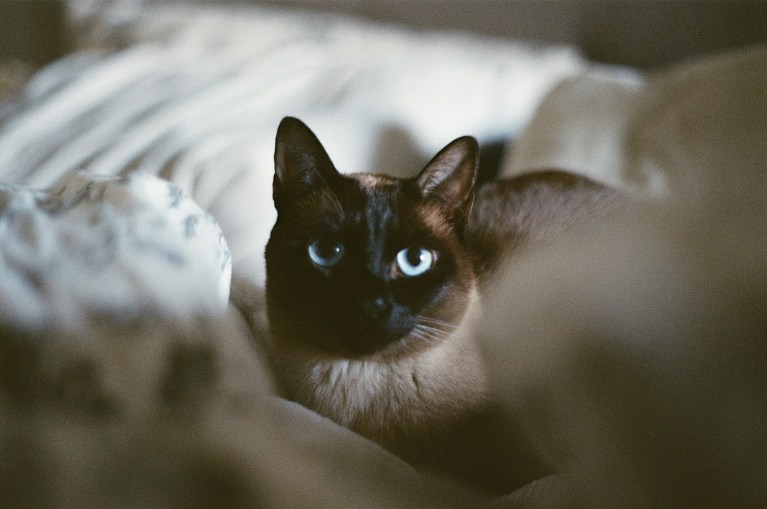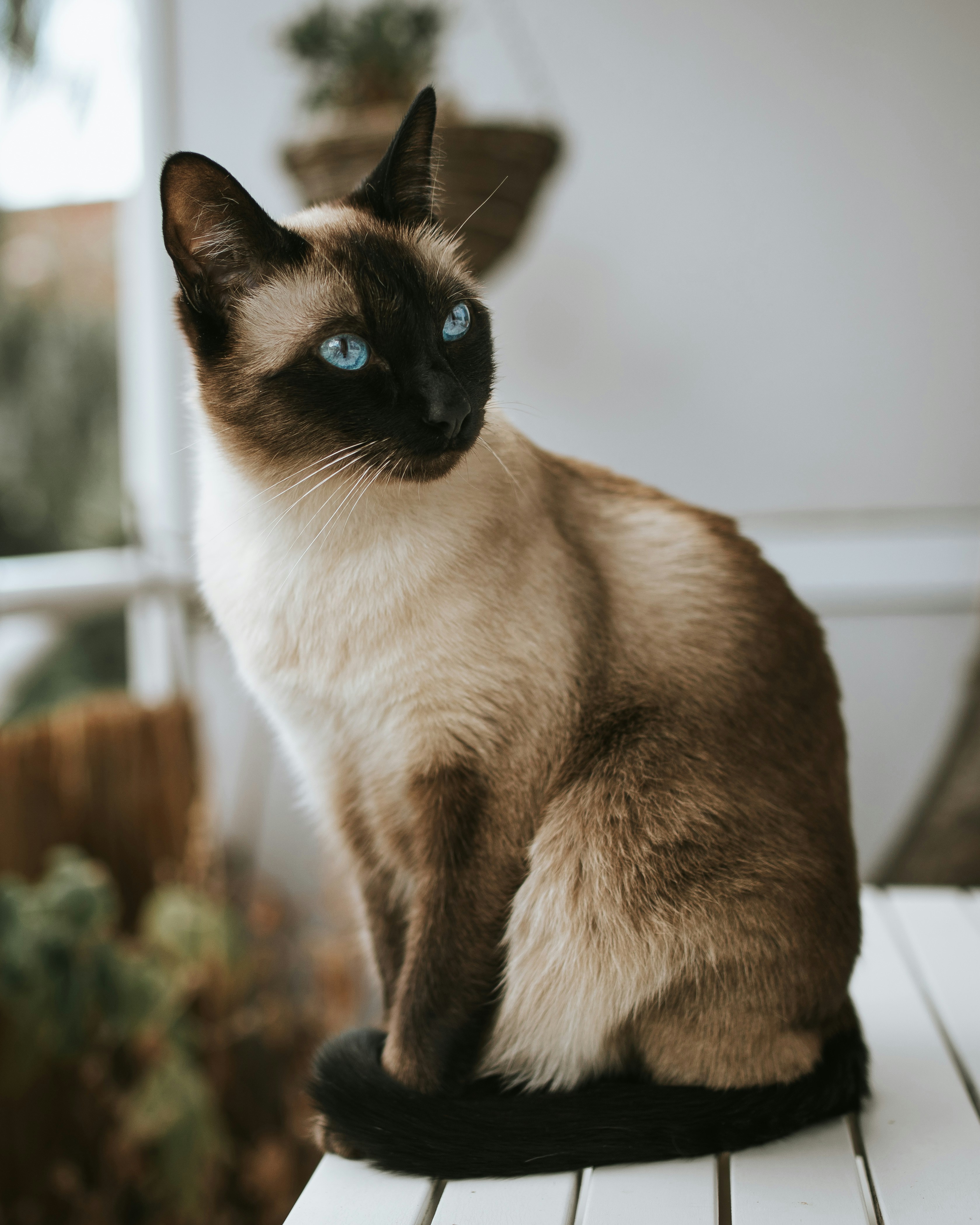

If your ideal feline companion is an independent, detached pet that blends silently into the background, the Thai Cat is definitively not the match for you. Universally celebrated as the living blueprint of the historical color-pointed cats of Southeast Asia, this breathtaking breed is famous for its striking color contrasts, its distinctive “applehead” shape, and an intense pair of luminescent sapphire-blue eyes.
Often described as a traditional royal heirloom wrapped in sleek silk, the Thai is a masterclass in interactive companionship. They are intensely human-oriented, highly perceptive, and exceptionally communicative felines that treat their human family as a personal pack. Let’s dive deep into the ancient history, temperature-sensitive genetics, and devoted behavioral profile of the extraordinary Thai cat.
🐾Physiological and Behavioral Profile
| Breed Attribute | Standard Metric / Trait |
|---|---|
| Average Weight | Males: 4.1kg – 5.9kg (9–13 lbs) Females: 3.2kg – 4.5kg (7–10 lbs) |
| Average Lifespan | 15 to 20+ years (An exceptionally long-lived, hardy lineage) |
| Coat Texture & Type | Short, fine, glossy, and lying flat against the body; single-coated |
| Energy & Activity Level | High (Highly athletic, deeply curious, active but exceptionally balanced) |
| Vocalization Level | High (Exceedingly conversational; speaks in a soft, melodic, or chanting tone) |
From the Cat-Book Poems to Global Renown: The Old-Style Origin
The history of the Thai cat is deeply entwined with ancient Thai antiquity and royal prestige. In its native homeland of Thailand, the breed is known as the Wichien-Maat, which translates beautifully to “Moon Diamond” or “Diamond Cat.” Exquisite hand-painted illustrations and poetic descriptions found in the ancient Tamra Maew (The Cat-Book Poems), which date back to the Ayutthaya Kingdom (1351–1767), celebrate these felines as sacred protectors of palaces and temples.
When these color-pointed cats were first imported to Europe and America in the late 19th century, they possessed a robust, rounded body shape and a soft, wedge-shaped head. However, throughout the mid-to-late 20th century, the Western show ring aggressively pushed the Siamese breed toward an extreme, ultra-streamlined, and tubular look.
To preserve the authentic, natural look of the original temple cats, a passionate global network of breeders isolated the traditional lines. In 1990, the World Cat Federation (WCF) officially granted full championship status to this ancestral form under the name Thai Cat to honor its true geographic roots, followed closely by The International Cat Association (TICA). Today, they are fiercely preserved as an independent pedigree, keeping the ancient Wichien-Maat line purely intact.
📐 Distinct Physical Architecture & The Applehead Somatotype
Physically, the Thai exhibits a medium-sized, muscular, and highly robust semi-cobby somatotype. Unlike the modern extreme Siamese, Thai cats carry a substantial, elegant framework that values balance over exaggeration. When you pick up a Thai cat, they feel surprisingly solid and heavy—like a tightly packed bundle of pure, supple muscle. Their heads form a modified wedge shape with gently rounded contours, full cheeks, and prominent brow ridges that give them their signature “applehead” profile. Their eyes are large, almond-shaped, and radiate an intense, piercing shade of deep sapphire blue.
The absolute hallmark of the breed is its unique temperature-sensitive color-point pelt, which operates under highly specialized biological parameters:
- The Himalayan Albinism Gene (ch): The striking pattern of the Thai is governed by a specialized form of partial albinism. This gene makes pigment production temperature-sensitive. Thai kittens are born pure white inside the warm environment of the womb. As they mature, a localized enzyme activates coloration strictly on the coolest extremities of their body—the face mask, ears, paws, and tail.
- The Traditional Shading Spectrum: The breed standard recognizes the classic color-point variations:
- Seal Point: Deep, rich seal-brown points contrasting against a pale fawn body.
- Chocolate Point: Warm, milk-chocolate points against an ivory base.
- Blue Point: Soft, slate-blue points against a cool silvery-white body.
- Lilac Point: Delicate, frosty silvery-grey points with pink undertones against a pure white base.
- The Flat Satin Texture: The fur is exceptionally short, fine, and close-lying. It completely lacks a fluffy undercoat, allowing the sleek hair to trap and bounce light across the cat’s muscular contours, creating a brilliant, mirror-like satin sheen.
🧠 Behavior, Temperament, and Vocal Communication
The psychological and behavioural profile of the Thai cat centers around an extraordinarily high capacity for social intelligence, active human companionship, and vocal conversation.
1. The Chanting Conversationalist
If you prefer a quiet, predictable pet that blends into the background, a Thai cat will quickly rewrite your expectations. This breed is world-famous for its verbal communication. They do not merely meow; they talk to you using a massive vocal array of complex trills, chirps, sweeps, and rumbling demands. However, compared to the modern Siamese, their voice is typically noted for being softer, sweeter, and significantly more melodic—resembling a gentle chant.
2. Advanced Problem-Solving and Retrieval Play
Possessing an active, highly analytical mind, Thai cats require significant daily mental and physical stimulation to prevent frustration. They are natural performers that easily master interactive puzzle toys, clicker tricks, and possess a deeply ingrained natural instinct to play fetch for hours, expertly carrying paper balls or plush mice back to their owners’ hands.
3. Deep “Velcro” Companionship
This breed completely rejects isolation and practices extreme, undivided attachment to their human families. If you work from home, they will sit directly across your keyboard, wrap themselves over your neck like a scarf, or burrow deep beneath your duvet at night to share your body heat. Because of their highly social nature, they get lonely easily and thrive best when paired with another active feline companion or inside a bustling household layout.
🧼 Grooming, Diet, and Health Considerations
Because their fine coat is exceptionally short, tight, and completely lacks a fluffy undercoat, Thai cats require almost no manual grooming. A quick weekly pass with a soft rubber brush or a genuine chamois cloth is more than enough to lift away loose guard hairs and keep their satin pelt looking its best. From a medical standpoint, they are a remarkably long-lived breed, frequently crossing into their twenties, though their specialized genetic pool requires focus in a few critical corridors:
- Exceptional Genetic Health (Hybrid Vigor): Because the Thai breed was built by preserving the rugged, natural working lines of Thailand and outcrossing to traditional shorthairs rather than undergoing extreme physical manipulation, they boast an exceptionally diverse gene pool with high systemic resilience. They have no breed-specific genetic health defects.
- Lean Silhouette Maintenance: Because of their solid, heavy percentage of muscle mass over semi-cobby bones, carrying any excess body fat poses a severe hazard to their joints and spine. Prioritizing a portion-controlled diet rich in high-quality animal proteins while avoiding free-feeding dry kibble is highly recommended to protect their silhouette.
- Proactive Dental Hygiene: Like many ancient Eastern lineages, they can carry a slight baseline risk for minor gum inflammation if ignored. Introducing daily dental brushing with feline-safe enzymatic toothpaste early in life keeps their teeth pristine.
Final Thoughts: Is the Thai Cat Right for You?
Welcoming a Thai cat into your home is very much like introducing a highly interactive, deeply loving, and beautifully sapphire-eyed piece of living history into your family circle. If you travel constantly, leave your pets alone for long stretches, or prefer a quiet, detached pet, their intense energy, interactive tracking games, and constant vocal conversations will quickly become overwhelming. But if you have the time to invest in advanced clicker training, daily fetch sessions, and unconditional, under-blanket snuggle loops, the Thai will reward you with matchless loyalty, boundless entertainment, and an unforgettable bond. To check out more about historical breed standards, lineages, and registration lines, the comprehensive archives at the Governing Council of the Cat Fancy (GCCF) provide fantastic guidance for prospective owners.