Discovering that your meticulously kept household has been compromised by a flea infestation is one of the most frustrating milestones of pet ownership. Your immediate human reaction is often driven by a wave of mild panic. You rush to the local supermarket or high-street pet shop, purchase a generic flea shampoo, a chemical collar, or an over-the-counter spot-on oil, apply it to your cat, and assume the problem is solved.
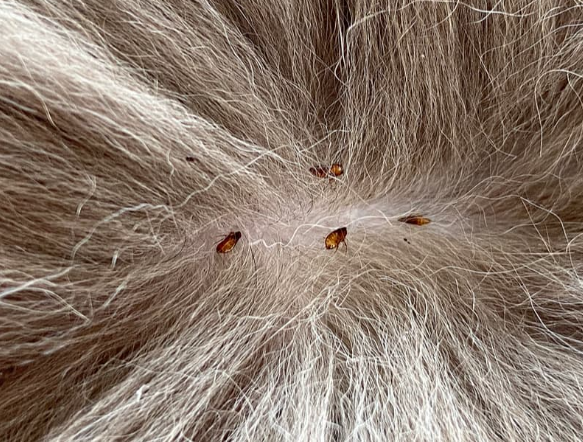
However, veterinary entomology reveals a startling biological reality: the adult fleas you physically see crawling on your cat’s skin represent a mere 5% of the total infestation.
The remaining 95% of the population is completely invisible to the naked eye, distributed across your living room rugs, bedroom baseboards, sofa cushions, and pet bedding in the form of microscopic eggs, larvae, and pupae. Attempting to kill fleas by only treating the adult insects on your cat is like trying to chop down an oak tree by clipping off a single leaf.

To clear an infestation permanently, you must understand the flea lifecycle and execute a multi-pronged eradication plan. This comprehensive clinical guide breaks down the science of flea biology, maps out veterinary-grade treatments, and provides an actionable step-by-step framework to rid your home and cat of fleas fast.
The Invisible Threat: Decoding the 4-Stage Flea Lifecycle
To defeat a flea colony, you must understand exactly how they reproduce. Fleas do not spend their entire lives on your pet. Instead, your cat acts as a biological feeding station, while your carpets and floorboards serve as the primary incubator.
The table below breaks down the structural architecture of a household flea infestation:
| Lifecycle Stage | Percentage of Infestation | Real-World Location | Vulnerability Level & Eradication Strategy |
| Adult Fleas | ~5% | Exclusively on your cat’s body, feeding on blood and laying eggs. | High: Instantly neutralized using veterinary-grade adulticides (Spot-ons/Oral tablets). |
| Flea Eggs | ~50% | Laid on the cat but smooth and non-sticky; they roll off into carpets, cracks, and bedding within hours. | Moderate: Requires strict mechanical removal (vacuuming) and Insect Growth Regulators (IGRs). |
| Flea Larvae | ~35% | Deep inside carpet fibers, under baseboards, and furniture. They feed on “flea dirt” (adult flea waste). | Low: Blind and avoid light; requires deep vacuuming and environmental chemical treatments. |
| Flea Pupae (Cocoons) | ~10% | Encased in a sticky, armored silk cocoon spun deep inside floorboard crevices and rugs. | Immune ❌ Completely resistant to all household insecticides. Must be forced to hatch via heat and vibration. |
Step 1: Neutralize the Parasites on Your Cat Natively
Never waste money on low-cost supermarket flea collars or generic spot-on oils. Many older over-the-counter treatments utilize chemical compounds like permethrin or pyrethroids, which can be highly toxic to felines and carry widespread genetic resistance, rendering them virtually useless against modern flea strains.
Instead, secure an authenticated prescription or veterinary-grade treatment from your local clinic. Modern veterinary pharmacology utilizes advanced molecules that target the nervous system of invertebrates without cross-reacting with mammalian biology:
- Premium Spot-on Treatments (Isoxazolines & Macrocyclic Lactones): Treatments containing active ingredients like Fluralaner (Bravecto), Selamectin (Revolution / Stronghold), or Afoxolaner (NexGard Combo) are exceptional. These compounds absorb cleanly through the skin into the bloodstream, killing 100% of adult fleas within 4 to 8 hours and providing continuous residual protection for 30 to 90 days.
- Rapid Oral Adulticides (Capstar / Nitenpyram): If your cat is suffering from severe flea allergy dermatitis (FAD) and is scratching skin raw, an oral tablet containing Nitenpyram will start killing adult fleas within 15 to 30 minutes. Note: Capstar leaves the body within 24 hours and must be paired with a long-term spot-on to prevent re-infestation.
Step 2: The Environmental Eradication Protocol
Because 95% of the infestation lives inside your home fabrics, you must turn your living spaces into a hostile environment for developing larvae and eggs. Execute this mechanical loop daily for 14 straight days:
1. The High-Temperature Laundry Sweep
Gather every single item of pet bedding, throw blankets, removable sofa covers, and human sheets that your cat has interacted with. Wash them in a washing machine on a hot cycle at 60°C (140°F) for a minimum of 20 minutes. The intense combination of hot water and laundry detergent instantly destroys flea eggs and dissolves the organic waste that larvae feed on.
2. Strategic High-Frequency Vacuuming
Vacuum every single square inch of your carpets, rugs, hardwood floor gaps, and fabric furniture cushions. Pay intense attention to dark zones beneath the sofa, behind wardrobes, and along baseboard tracks.
- The Science of Vibration: The physical weight and vibration of a running vacuum cleaner mimics the body heat and movement of a host. This tricks the armored, chemical-immune Flea Pupae into hatching prematurely, exposing the newly emerged adults to your active floor treatments and subsequent vacuum sweeps.
- Safe Disposal: The interior of a vacuum cleaner is a perfect incubator. Immediately empty your vacuum canister or discard the vacuum bag directly into an outdoor trash bin after every single session to prevent insects from crawling back down the pipe.
Step 3: Deploy an Environmental Spray with an IGR
Once you have mechanically cleared the surface layers, you must treat your floorboards and rugs with an advanced environmental residual household spray (such as Indorex or RIP Fleas).
When selecting a spray, ensure the product contains a potent Insect Growth Regulator (IGR) like methoprene or pyriproxyfen. While standard adulticides kill the live insects on contact, the IGR acts as a structural birth control for the environment. It mimics juvenile flea hormones, permanently stopping eggs from hatching and preventing larvae from spinning their protective cocoons.
Spray the chemical evenly along your carpet boundaries, tile cracks, and baseboard lines. Leave the windows open, evacuate all humans and pets from the room for at least two hours until the mist dries completely, and do not vacuum for 48 hours to let the residual protective barrier set.
Conclusion: Breaking the 3-Month Echo Cycle
Eradicating cat fleas fast is not a one-time event; it is an organized battle against an unbroken biological reproductive loop. Because armored pupae can lay completely dormant inside your floorboards for weeks before hatching, you should expect to see occasional “straggler” fleas popping up for up to 90 days after your initial treatment.
As long as you keep your cat on a continuous, veterinary-grade spot-on schedule, those newly hatched stragglers will bite the treated skin and die instantly before they can lay a single new egg, permanently breaking the cycle and restoring total peace to your home on catfun.co.uk.