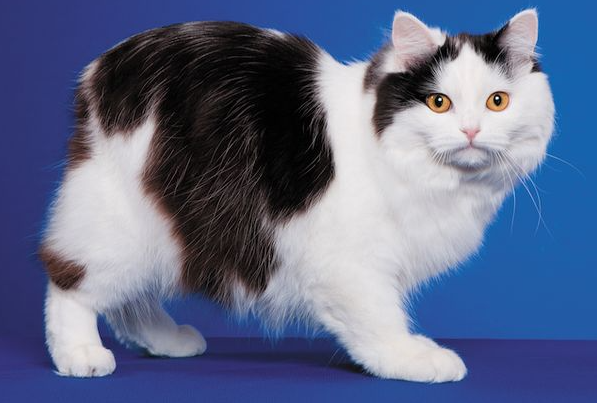
If you have ever dreamed of sharing your home with a cat that possesses the chunky, soft-eyed charm of a teddy bear paired with a completely unique anatomical silhouette, the Cymric (pronounced kum-rik) is a magnificent addition. Often described as a long-haired Manx, this historic island native is famous for its natural tail-free mutation and a thick, rabbit-soft double-coat that makes them look beautifully rounded.
Despite their exotic, wild look, Cymrics are among the most balanced, easygoing felines in existence. They are highly social, playful, and emotionally intuitive indoor companions that treat their human family as a personal pack. Let’s dive deep into the fascinating history, specialized skeletal architecture, and loving behavioral profile of the extraordinary Cymric cat.
🐾Physiological and Behavioral Profile
| Breed Attribute | Standard Metric / Trait |
|---|---|
| Average Weight | Males: 5.4kg – 7.2kg (12–16 lbs) Females: 3.6kg – 5.4kg (8–12 lbs) |
| Average Lifespan | 12 to 15 years |
| Coat Texture & Type | Semi-long to long, exceptionally dense double-coat; plush, padded, and rabbit-soft |
| Energy & Activity Level | Moderate (Playful and active in short bursts, loves to lounge on elevated perches) |
| Vocalization Level | Low (Communicates via exceptionally quiet, melodic trills and chirps) |
From the Isle of Man: The Isolated History of a Tail-Free Wonder
The Cymric shares its historical lineage entirely with the short-haired Manx. The breed developed on the Isle of Man, an isolated island located in the Irish Sea between Great Britain and Ireland. Because the island’s feline population was entirely geographically isolated, a single spontaneous genetic mutation affecting the development of the caudal vertebrae (tail bones) spread naturally through the local domestic cat gene pool.
While short-haired tail-free kittens were celebrated for centuries, long-haired kittens would occasionally appear entirely by accident in pure Manx litters due to a hidden recessive gene. For decades, these fluffy anomalies were quietly given away as pets, viewed by early breeders as deviations from the strict short-haired standard.
However, in the mid-1960s, a visionary group of breeders in Canada and the United States decided to embrace this natural genetic twist. They isolated the long-haired lines and established a dedicated breeding program to standardize the layout. The breed was named Cymric—derived from Cymru, the Welsh name for Wales—to honor its Celtic sea-faring roots. The International Cat Association (TICA) officially granted the breed full championship status by the late 1970s.
📐 Distinct Physical Architecture & The Tail-Free Phenotype
Physically, the Cymric exhibits a compact, robust, and highly rounded somatotype. They carry a heavy skeletal framework with an incredibly short back that arches smoothly from the shoulders down to their high, muscular rump. Their hind legs are noticeably longer than their front legs, giving them an incredibly powerful spring and a unique, rabbit-like hopping stride when they run.
The defining hallmarks of the breed are its structural levels of tail length and its plush coat parameters:
- The Four Tail Classifications: To maintain genetic diversity and safety, Cymrics are bred with varying degrees of tail lengths. They are classified into four distinct structural categories:
- Rumpy: Completely tail-free, often featuring a distinct dimple at the base of the spine where the tail would naturally begin. This is the absolute standard for show rings.
- Rumpy-Riser: Possesses a tiny rise of bone (usually 1 to 3 vertebrae) that can be felt when the cat is petted.
- Stumpy: Carries a short, movable stump of a tail (roughly 3 to 10cm long).
- Longy: Possesses a nearly normal-length tail, which is vital for ethical breeding lines.
- The Padded Double-Coat: The coat is semi-long, thick, and stands completely away from the body due to a dense, plush undercoat. It has a uniquely soft, open texture that feels identical to a rabbit’s fur. They feature a majestic neck ruff and heavy leg fur (“pantaloons”) that accentuate their rounded appearance.
🧠 Behavior, Temperament, and Household Harmony
The psychological and behavioural profile of the Cymric cat centers around an extraordinary capacity for gentle social intelligence, quiet environmental observation, and fierce loyalty.
1. Powerful Jumpers and Proprioception
Do not let their heavy, rounded teddy-bear build fool you; powered by their long, muscular hindquarters, Cymrics possess elite jumping capabilities. They can effortlessly leap from a standstill onto the highest point of your refrigerator or bookshelves. They are highly agile felines that display a keen sense of spatial awareness and problem-solving, often learning how to slide open closet doors or activate touch-sensitive toy mechanisms.
2. The Direct Shadow (Dog-Like Loyalty)
Cymrics are famously celebrated for their “dog-like” personalities. They form an intensely close, integrated social bond with their human families. They are notorious shadows that will follow you from room to room just to monitor your activities, greeting you enthusiastically at the front door when you return. They are highly gregarious and rarely exhibit fear-based anxiety around strangers, barking household dogs, or busy young children.
3. Quiet Trilling and Stalking Drive
True to their working farm roots on the Isle of Man, Cymrics have retained an exceptionally sharp hunting instinct. Any stray insect or mouse entering their territory will immediately trigger their stalking sequence, making them exceptional natural mousers. When they choose to communicate, they rarely utilize harsh meows; instead, they express their needs using a highly distinct series of soft, musical trills and chirps.
🧼 Grooming, Diet, and Health Considerations
Because their semi-long double-coat is exceptionally dense, Cymrics require consistent physical maintenance. A thorough twice-weekly combing with a high-quality steel comb is essential to lift away loose undercoat hairs, prevent density mats from forming beneath their limbs, and keep their plush fur looking its best. From a medical standpoint, they are a robust and long-lived breed, though their unique tail-free genetics require highly focused attention in a few critical corridors:
- Manx Syndrome (Spina Bifida Variant): The dominant gene that causes tail-free anatomy can occasionally affect the development of the lower spine, nerves, and bowels if bred incorrectly. Ethical breeders monitor lines meticulously, outcrossing rumpies with long-tailed lines to ensure kittens are completely healthy and free of neurological issues.
- Caloric Control and Obesity Management: Because they are naturally heavy-boned and lead a balanced, moderate-energy lifestyle, adult Cymrics can easily carry excess weight if overfed. Prioritizing a portion-controlled diet rich in high-quality animal proteins while strictly avoiding free-fed dry kibble is vital to protect their short, arched spines from structural strain.
- Basic Rear Hygiene: Because of their long pantaloons and tail-free anatomy, minor waste particles can occasionally cling to their rear fur. Keeping this zone trimmed neatly or performing localized wipes keeps them completely clean and bright.
Final Thoughts: Is the Cymric Right for You?
Welcoming a Cymric into your home is very much like adding a peaceful, beautifully plush piece of living island history to your life. If your dream household involves a high-octane, vocal oriental cat that constantly demands vocal conversations, their quiet, grounded, and gentle nature may feel a bit too reserved. But if you desire an incredibly intelligent, deeply loyal, and visually unforgettable companion that will calmly anchor your home with unconditional love, the Cymric is perfection itself. To explore more about tracking down ethical breeders or reviewing international show criteria for this wonderful breed, the archives on the Governing Council of the Cat Fancy (GCCF) provide exceptional guidance.