The British Shorthair is widely regarded as one of the oldest identifiable cat breeds in the world, with ancestral roots that trace back over two thousand years to the peak of the Roman Empire. Roman soldiers originally brought these sturdy felines across continental Europe and into the British Isles to act as working camp guards, protecting precious grain storage and army rations from local rodent populations. Over the subsequent centuries, these working camp cats bred with native European wildcats, developing a uniquely thick, dense, and water-resistant coat to survive the damp, harsh British climate.
Following centuries of natural selection on the streets and farms of Great Britain, dedicated breeders began standardizing the feline during the late 19th century, showcasing them at the world’s very first official cat shows. Today, they have evolved from skilled, rugged street hunters into the ultimate indoor family companion, loved worldwide for their calm disposition and unmistakable physical presence.
🐾 Physiological and Behavioral Profile
| Breed Attribute | Standard Metric / Trait |
| Average Weight | Males: 5.5kg – 8kg Females: 3.5kg – 5.5kg |
| Average Lifespan | 12 to 15+ years |
| Coat Texture & Type | Extremely dense, crisp, short plush double-coat |
| Energy & Activity Level | Low to Moderate (Calm, dignified, and highly independent) |
| Vocalization Level | Very Low (Rarely meows; communicates with soft, quiet chirps) |
📐 Distinct Physical Architecture
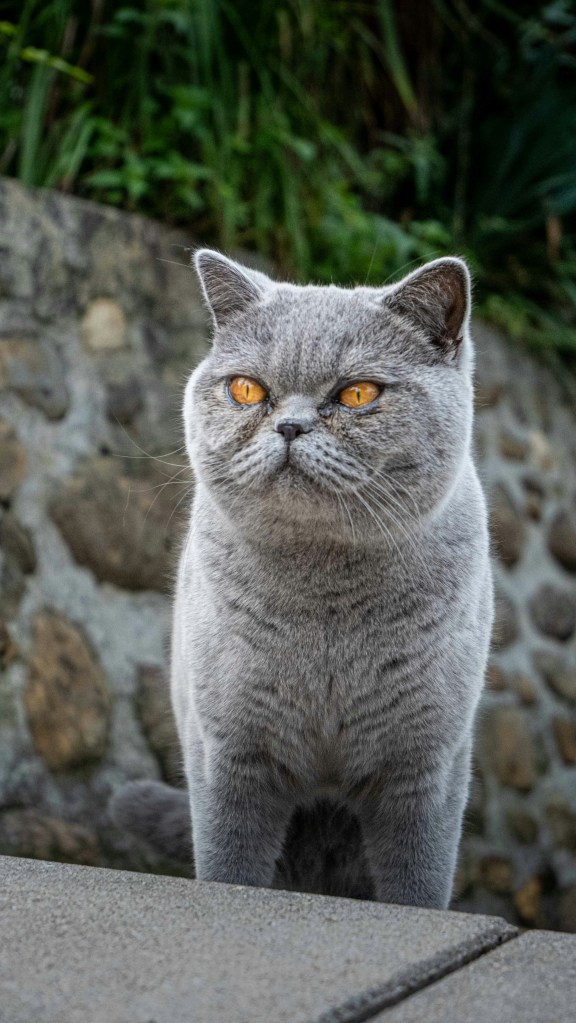
The definitive physical hallmark of the British Shorthair is absolute roundness. Their head is large, broad, and perfectly circular, featuring chubby, prominent jowl flaps that give the breed a comical, permanent “smiling” expression. This classic look served as the direct creative inspiration for the legendary Cheshire Cat in Lewis Carroll’s Alice’s Adventures in Wonderland. They possess large, wide-set, circular eyes that are traditionally a deep copper or brilliant orange color, giving them a striking, intense gaze that balances out their cute features.
Their bodies are structurally classified as “cobby.” This means they are stocky, low-lying to the ground, exceptionally broad across the shoulders, and built with solid, thick bone structures. Their deep chest, thick neck, and short, muscular paws make them look less like a nimble, streamlined hunter and more like a cuddly, heavy-set teddy bear. Their plush fur is so unique that it is often described as feeling like a crisp, thick wool rug rather than traditional soft cat hair, and it actively bounces back into place when stroked.
🧠 Behavior, Temperament, and Family Compatibility
In terms of personality, the British Shorthair acts like a dignified, quiet English aristocrat. They are incredibly patient, emotionally stable, and completely unflappable, making them an exceptional option for busy households with noisy young children, chaotic family routines, or active companion dogs. They are not easily startled and handle household noise with remarkable grace.
Unlike more demanding or anxious breeds, the British Shorthair does not require constant human entertainment, interactive toys, or intensive attention. They are deeply affectionate creatures but choose to display their loyalty calmly. They prefer to curl up on the sofa right next to your legs, lay on the floor near your feet, or watch you cook from across the room rather than sitting directly on top of your laptop keyboard or begging to be carried around. They are completely content spending the day sleeping peacefully while you are away at work, meaning they rarely suffer from separation anxiety or stress-induced behavioral issues.
🧼 Grooming, Diet, and Health Considerations
Because their short plush coat is incredibly dense, it acts like a thick carpet trap that collects loose, dead hair underneath the surface. While they are a low-maintenance short-haired breed compared to long-haired Persians, they still require a thorough combing with a high-quality slicker brush at least twice a week. During the seasonal shedding periods in spring and autumn, this routine should be increased to daily brushing to prevent them from swallowing dead fur and experiencing uncomfortable hairballs.
Genetically, British Shorthairs are a robust, sturdy, and healthy breed with few congenital issues. However, due to their low-energy lifestyle and love for long, undisturbed naps, they are highly prone to feline obesity. Because they are built with heavy frames, excess weight can put an immense, damaging strain on their joints and cardiovascular systems. Human owners must strictly monitor their nutritional portions, utilize controlled feeding schedules rather than leaving dry bowls out all day, and encourage short bursts of active play to protect their long-term health.