It is one of those wonderfully baffling domestic cat mysteries. You walk into the kitchen to prepare your feline companion’s morning meal, only to find their favourite furry mouse, a neon plastic spring, or a crinkly ball floating dead-centre in their water dish or tucked neatly alongside their dry kibble.
While it looks like a bizarre artistic statement, a clumsy accident, or a subtle protest about the quality of their biscuits, this quirky habit is actually rooted in deep evolutionary programming. Your cat isn’t trying to season their toys, wash their hands, or tell you they want a bigger portion—they are following instincts passed down through thousands of years of feline ancestry.
At CatFun, our mission is to decode these odd habits using evidence-based feline behaviour science. When you peel back the layers of domestication, you find that your living room tiger treats their feeding station like a highly strategic vault. Here is the comprehensive breakdown of exactly why cats drop their prized possessions into their food and water bowls.

1. The “Safe Deposit Box” Instinct (The Concept of Caching)
To understand this behaviour, we have to look closely at how a cat’s ancestors survived in the wild. Unlike lions or wolves, smaller wild felines are solitary hunters. They do not hunt in packs, they do not share their meals, and they do not have a community to protect their assets.
When a wild cat successfully catches a small rodent, bird, or lizard, they face an immediate dilemma: larger, more dominant predators or opportunistic scavengers (like foxes, birds of prey, or other cats) can easily track the scent and steal their hard-earned meal. To combat this, wild cats practice a survival strategy known as caching. Caching involves hiding uneaten food or valuable items in a safe, secure location within their established core territory where other animals are unlikely to stumble across it.
Now, let’s look at your pampered indoor cat. Even though they are fed premium meals from a tin, their biological programming remains identical to their wild ancestors. To your cat, a toy isn’t just an inanimate object; it is a surrogate “prey” item that they have successfully stalked, pounced on, and “killed” during play.
Once the play session ends and their hunting drive is temporarily satisfied, the evolutionary instinct to cache kicks in: “I must put this valuable prey somewhere safe from rivals before I let my guard down.”
Because your cat views their feeding station as a highly secure, familiar, and uncompromised part of their personal territory, the food or water bowl becomes the ultimate feline safe deposit box. By burying the toy in kibble or submerging it in water, they are symbolically hiding their catch from the rest of the household.
2. The Association with Core Resources
In feline territory dynamics, a home is divided into distinct zones. There are peripheral zones where cats explore and hunt, and there are core nesting zones where they sleep, groom, and eat. These core zones are associated with absolute safety.
A cat’s food and water bowls are the literal anchors of their core nest. They return to these coordinates multiple times a day, and they associate the area with comfort, survival, and zero threats.
By dropping a toy into a bowl that always yields fresh water or clean food, your cat is linking two highly positive, safe entities together. It is an incredibly memorable location for them. If they leave a toy mouse in the middle of the hallway, a human might step on it, the vacuum cleaner might eat it, or a rival pet might claim it. But the food bowl? That is their space. They know exactly where the toy is, they can easily track its location, and they trust that the area is secure.
3. Gathering the “Litter” (Maternal and Nesting Instincts)
This behaviour is particularly common in unspayed female cats, but it is frequently witnessed in spayed females and neutered males as well. It boils down to a deeply hardwired maternal instinct.
When a queen (a mother cat) gives birth to a litter of kittens, her entire existence revolves around keeping them contained within the safety of the nest. If an adventurous kitten wanders too far from the group, the mother will gently grab them by the scruff of the neck and physically carry them back to the core nesting area, right next to where she eats and nurses.
Domestic cats often project these maternal, protective instincts onto their toys—especially small, soft, plush toys that roughly mirror the size and texture of a newborn kitten. When a cat carries a plush mouse across the house in their mouth and deposits it directly into their food dish, they are acting out this exact nesting ritual. They are gathering up their “babies” and returning them to the safest, most resource-rich spot in their territory to keep them protected and fed.

4. The “Washroom” Effect: Turning Water into an Arcade
If your cat’s toys specifically end up in their water dish rather than the food bowl, you might just have a feline tinkerer on your hands. While most cats are famously averse to getting wet, certain breeds—such as the Maine Coon, Bengal, Savanah, and Turkish Van—are notoriously fascinated by water.
For a highly intelligent, active indoor cat, an ordinary water dish can feel a bit boring. By dropping a lightweight toy into the water, they completely change its physics. Suddenly, the toy bobs, floats, spins, and creates interesting ripples across the surface.
Cats love watching things move unpredictably. Dunking a toy allows them to pat at the water, try to “fish” the toy back out, and watch how the texture of the toy changes as it absorbs moisture. For a bored feline looking for a bit of spontaneous mental stimulation during the day, turning their water dish into a water park is an excellent way to pass the time.
5. Pure Convenience and Feline Multi-Tasking
Sometimes, the scientific explanation isn’t deeply psychological—it is beautifully simple and practical. Your cat simply changed their mind midway through a game.
Imagine your cat is happily trotting through the kitchen, proudly carrying their favorite plastic spring or crinkly ball in their jaws. Suddenly, they catch the aroma of the fresh wet food you are setting down, or they realize they are incredibly thirsty after all that running around.
Because a cat cannot easily chew kibble, lap up water, or meow at you for treats while their mouth is stuffed with a toy, they have to drop it. The most convenient place to drop it happens to be the exact bowl they are standing over. Once their belly is full and their thirst is quenched, post-meal lethargy sets in. The cat grooms themselves, curls up for a nap, and completely forgets about the toy until you discover it during your next kitchen cleanup.
Identifying and Managing Toy-Dunking Behaviours
Generally speaking, this habit is completely harmless, highly natural, and requires no behavioral correction. However, because indoor hygiene is vital for your cat’s long-term health, there are a few practical management steps you should take if your cat is an avid toy dunker:
Keep a Rigorous Cleaning Schedule
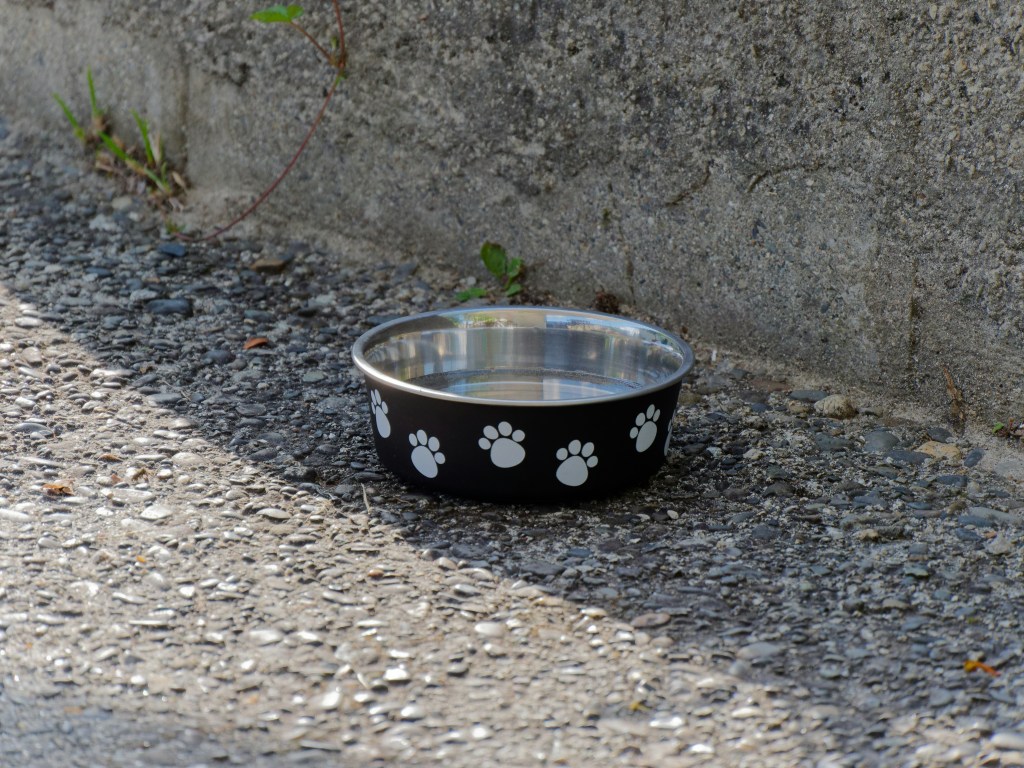
Wet plush toys left sitting in a water dish or mixed with wet food residue can become a breeding ground for harmful bacteria, mould, and mildew within a matter of hours. If your cat drinks bacteria-laden water, it can lead to gastrointestinal upset or urinary tract issues. Make it a habit to wash your cat’s bowls daily with hot, pet-safe soap, and thoroughly squeeze out or wash any drowned toys.
Audit Your Cat’s Toy Box
Look closely at the types of toys your cat likes to carry around. If they are prone to putting them in water, ensure those toys do not contain:
- Small, glued-on googly eyes or felt ears that can dissolve and become choking hazards.
- Internal electronic microchips, speakers, or batteries that can corrode and leak toxic chemicals into the drinking water.
- Dyes or feathers that can bleed pigment or degrade rapidly when wet.
Instead, provide them with solid plastic springs, hard ping-pong balls, or easily washable, non-toxic rubber toys for their kitchen adventures.
Elevate and Separate the Bowls
If you want to discourage the behavior slightly, try moving their toys further away from the feeding station, or try separating their food and water bowls. In the wild, cats prefer not to drink water right next to their fresh kill because of potential contamination. Separating the bowls might disrupt the “caching” loop just enough to stop them from dropping toys in the water.
Introduce Advanced Mental Enrichment
If your cat is dunking toys out of pure boredom, it is a sign they need more complex tasks to challenge their brains. Swap out traditional food bowls for puzzle feeders, lick mats, or activity boards. These tools force your cat to use their paws and problem-solving skills to “hunt” for their dry food, which satisfies their predatory drives in a highly constructive, mess-free way.
Summary
Finding a soggy fabric mouse floating in your cat’s water bowl might be a minor domestic annoyance, but it is actually a beautiful reminder of the wild, untamed spirit living inside your household pet. By caching their toys, your cat is showcasing their brilliant survival instincts, their protective nature, and their quirky ability to find entertainment in the simplest household objects. Embrace the quirk, keep the bowls clean, and enjoy the fascinating psychological world of your miniature indoor apex predator!