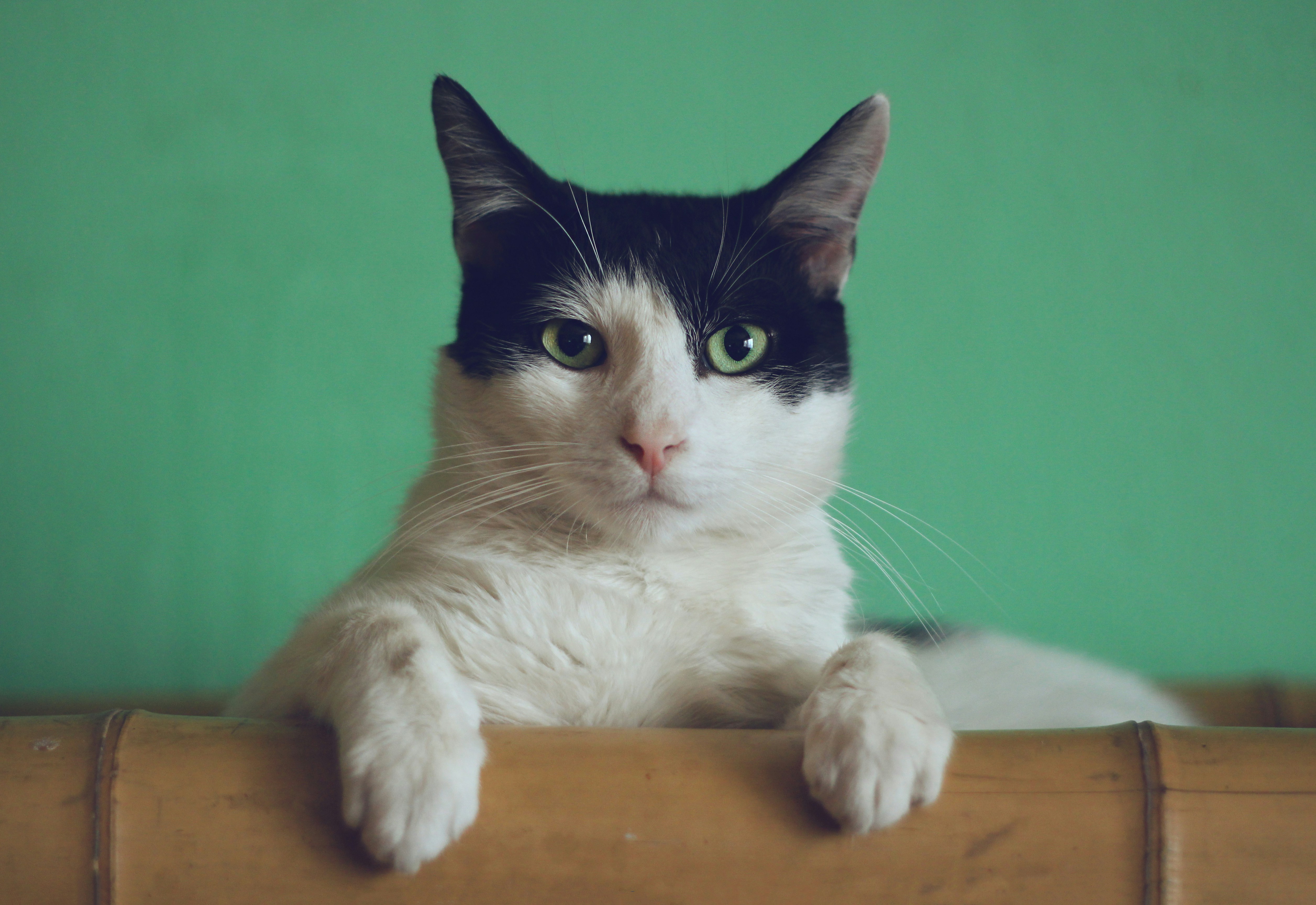

A few years ago, a bizarre trend took over social media platforms like YouTube, TikTok, and Reddit. Handfuls of identical compilation videos emerged showing cat owners quietly sneaking up behind their unsuspecting felines while they were eating. The owners would gently place a standard green cucumber on the floor directly behind the cat and step back with a camera.
When the cat finished eating, they would turn around, spot the cucumber, and launch themselves violently into the air—sometimes clearing several feet—out of sheer, unadulterated panic.
The internet found it hilarious, and “cats vs. cucumbers” quickly became an immortal meme. But beneath the viral comedy lies a serious behavioral question. Why on earth would an apex domestic predator be mortally terrified of a harmless salad vegetable?
As it turns out, the reaction has absolutely nothing to do with the cucumber itself. Instead, it is an evolutionary survival mechanism hardwired deep into the feline brain.
1. The Sudden Predator Instinct (The Snake Illusion)
The primary reason a cat leaps away from a cucumber is due to their evolutionary history. Before felines became pampered domestic house guests, their wild ancestors lived in environments where they were both hunters and hunted.
One of the most dangerous, silent threats to a wild cat is a venomous snake. Snakes are ambush predators that slither silently through the grass and can deliver a fatal bite in the blink of an eye.
To a cat’s rapid visual processing system, a long, green, cylindrical object appearing silently out of nowhere looks exactly like a snake. When the cat turns around and spots the cucumber, their brain bypasses logical thought and instantly triggers a life-saving reflex: get as far away from the ground object as physically possible. The dramatic airborne leap is designed to clear the strike zone of a striking viper.
2. Violation of the “Safe Zone”
If you look closely at almost every single viral cucumber video on the internet, the prank is carried out while the cat has their head down inside their food bowl.
In feline psychology, the feeding station is considered an absolute “safe zone.” Because cats are hyper-alert animals, eating requires them to lower their guard and focus their senses downward. They will only eat in areas where they feel completely secure and hidden from the rest of the world.
By sneaking an object into their eating area while their back is turned, the owner completely violates that sense of security. When the cat finishes eating and realizes an unknown object has breached their perimeter without them hearing it, it causes an immediate adrenaline spike. If you placed a random stuffed animal, a hair dryer, or a banana behind them in the exact same manner, the startle response would be almost identical.
3. The Genetic Startle Reflex
Cats possess one of the fastest startle reflexes in the animal kingdom, known as the acoustic startle reflex (which also responds to sudden visual stimuli).
Because felines have an incredibly flexible spine and highly elastic muscle fibers, their bodies are designed to bounce away from a threat before their conscious mind even has time to process what the object actually is.
When a cat spots the unexpected cucumber, their nervous system undergoes a massive, instantaneous “fight-or-flight” response. Their heart rate skyrockets, cortisol floods their bloodstream, and their muscles contract to launch them away. It is only after they land safely several feet away that their brain evaluates the object and realizes the terrifying intruder is just an inanimate vegetable.
Why You Should Never Scare Your Cat with Cucumbers
While the videos might look like harmless fun, animal behaviorists and veterinarians strongly advise owners never to replicate this prank at home. Intentionally scaring your pet for entertainment can have long-lasting negative impacts on their physical and psychological well-being.
The Hidden Dangers of Scaring Your Cat:
- Prolonged Psychological Stress: Repeatedly scaring a cat in their feeding zone can induce chronic anxiety. They may begin to associate their food bowl with danger, leading to food avoidance, vomiting, or behavioral issues like feline depression.
- Physical Injury: The violent, uncontrolled leap triggered by a startle reflex can cause a cat to crash into furniture, walls, or glass doors, potentially leading to pulled muscles, torn ligaments, or broken bones.
- Destruction of Human-Animal Trust: Cats rely on their owners for safety and stability. If you consistently trick or terrify them, you will erode their trust in you, causing them to become reclusive, fearful, or defensively aggressive toward your hands.
Conclusion: Keep the Salads in the Kitchen
The infamous “cats vs. cucumbers” phenomenon is a fascinating demonstration of how closely our domestic pets are still connected to their wild African ancestors. Their survival instincts are finely tuned machines designed to protect them from hidden predators.
Rather than testing your cat’s reflexes with vegetables, respect their safe zones, keep their feeding stations peaceful, and leave the cucumbers where they belong—safely sliced up in your fridge.